New Methods, New Perspectives, and Long-Term Transformations

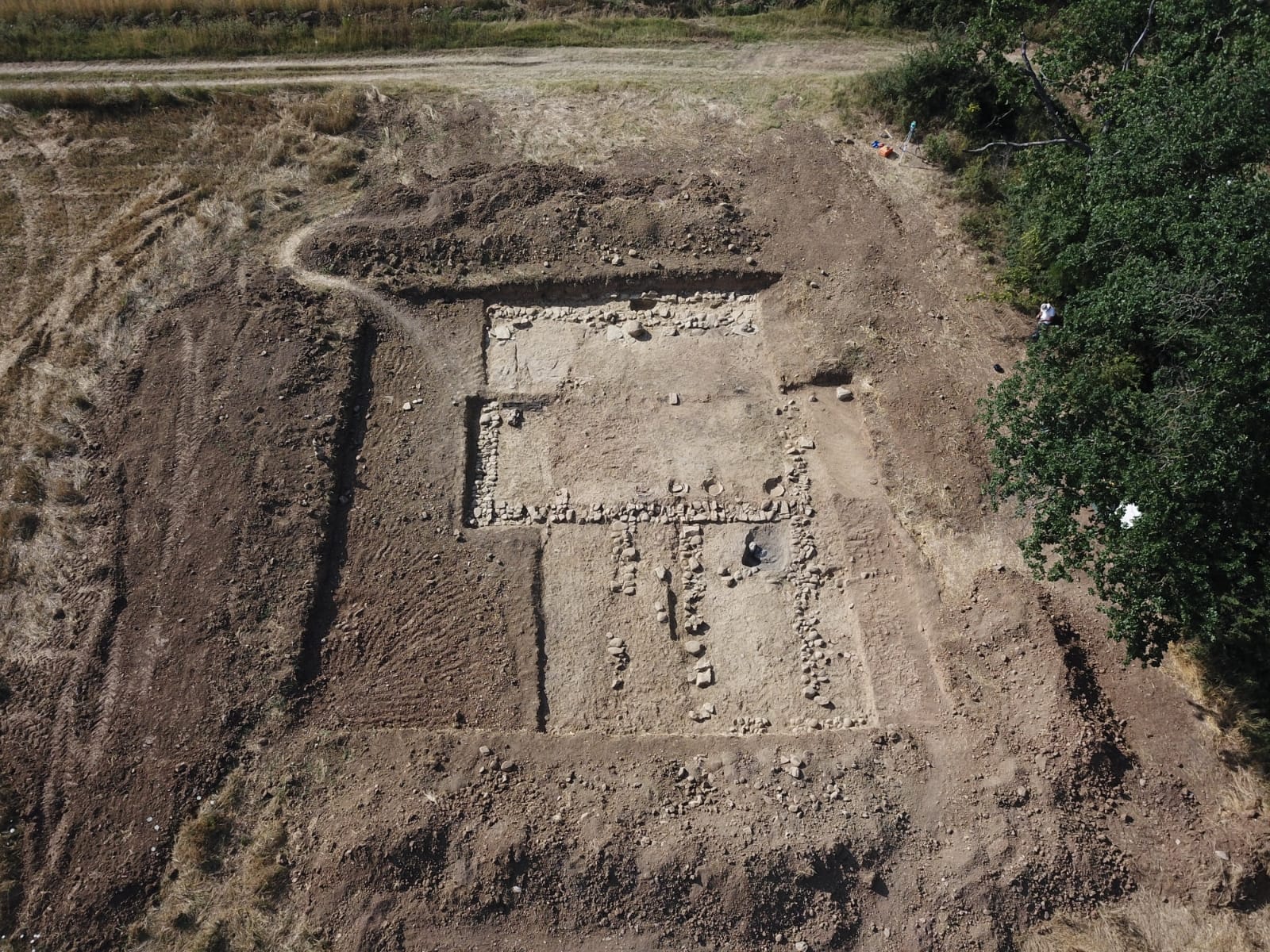
The funerary landscape represents one of the most dynamic and informative dimensions of the ancient world. Cemeteries, tombs, burial monuments, commemorative practices, and the relationship between the dead and the living offer unique perspectives on social identities, mobility, economy, religious beliefs, memory, and the transformation of communities over time. Across Roman Italy, funerary spaces were continuously reshaped by political change, cultural interaction, demographic movements, economic development, and evolving perceptions of death and commemoration.
This edited volume aims to bring together scholars working on funerary archaeology and mortuary studies in Roman Italy, from the Hellenistic period to the early Middle Ages. The goal is to explore funerary landscapes as complex cultural, social, and spatial phenomena, integrating traditional archaeological approaches with innovative methodologies and theoretical perspectives.
Particular attention will be given to the ways funerary spaces interacted with settlements, roads, sacred areas, agricultural landscapes, and emerging urban and rural identities. Contributions are encouraged to address both large-scale regional analyses and site-specific investigations, highlighting continuity, change, and resilience across nearly a millennium of Italian history.
The volume welcomes interdisciplinary approaches, including archaeology, bioarchaeology, archaeometry, landscape archaeology, GIS-based analyses, remote sensing, digital humanities, epigraphy, anthropology, and heritage studies.
Proposed Sections
Part I. New Methods and New Approaches
This section focuses on innovative methodologies and theoretical frameworks applied to the study of funerary landscapes and mortuary practices.
Potential topics include:
- Landscape archaeology and spatial analysis
- GIS, remote sensing, and predictive modeling
- Bioarchaeology and paleodemography
- Isotopic and aDNA analyses
- Digital reconstruction and visualization
- Funerary memory and commemorative practices
- Community archaeology and public engagement
- Theoretical approaches to death, identity, and social space
Part II. Case Studies
A. Hellenistic and Republican Italy
Contributions examining funerary landscapes between the fourth and first centuries BCE, including:
- Etruscan, Italic, and Roman funerary traditions
- Processes of Romanization and cultural interaction
- Urban and rural cemeteries
- Monumentality and social differentiation
- Mobility, connectivity, and regional identities
B. Imperial Italy
Studies focusing on funerary practices and landscapes from the first to fourth centuries CE, including:
- Urban necropoleis and suburban cemeteries
- Roadside funerary monuments
- Family memory and funerary representation
- Professional, religious, and ethnic identities
- Funerary landscapes and urban development
C. Late Roman and Early Medieval Italy (5th–8th Centuries CE)
This section explores the profound transformations of funerary landscapes during Late Antiquity and the early medieval period, including:
- Christianization and changing burial customs
- Cemeteries associated with churches and cult places
- Rural funerary landscapes
- Continuity and reuse of Roman funerary spaces
- New social and political identities
- Mobility, migration, and community formation
Submission Guidelines
Scholars interested in contributing are invited to submit an abstract of approximately 300–500 words, accompanied by a short biographical note (maximum 150 words).
Contributions should present original research and may address individual sites, regional syntheses, methodological innovations, or broader theoretical questions.
The volume will be published in the MEDI-TO (Mediterraneo Toscano) series by Brepols Publishers and will undergo full peer review.
Please submit your abstract to as424@buffalo.edu
Timeline
- Abstract submission deadline: 30 September 2026
- Notification of acceptance: 15 October 2026
- Full paper submission: 28 February 2027
Volume Editors
Alessandro Sebastiani (University at Buffalo)
Alessandro Carabia (University of Newcastle)
Todd Fenton (Michigan State University)