Testimonial – Constance Champagne (University of Edinburgh)

When I had first signed onto the IMPERO project, I had no clue what to expect. I had never studied archeology or picked up a trowel in my life. Nevertheless, I was always fascinated by history and wanted to get firsthand experience with the past. So, I packed my bags for Italy. Little did I know, I was in for one of the most unique and gratifying experiences of my life.

Our humble, small team was made up of an eclectic mix of characters, all contributing something special to the project. Our director, Alessandro, oversaw the site with precision coupled with Tuscan charm. Edoardo brought his quirky humor, in an equally quirky van. Valentina remained ever patient with the aspiring archeologists. Todd maintained an energetic optimism that kept everyone going. And finally, Maura, my fellow student, was always bright and talkative, pacing our seemingly endless troweling. I could not have asked for a better team. All were equal with such passion, one couldn’t help but feel personally invested in the project.

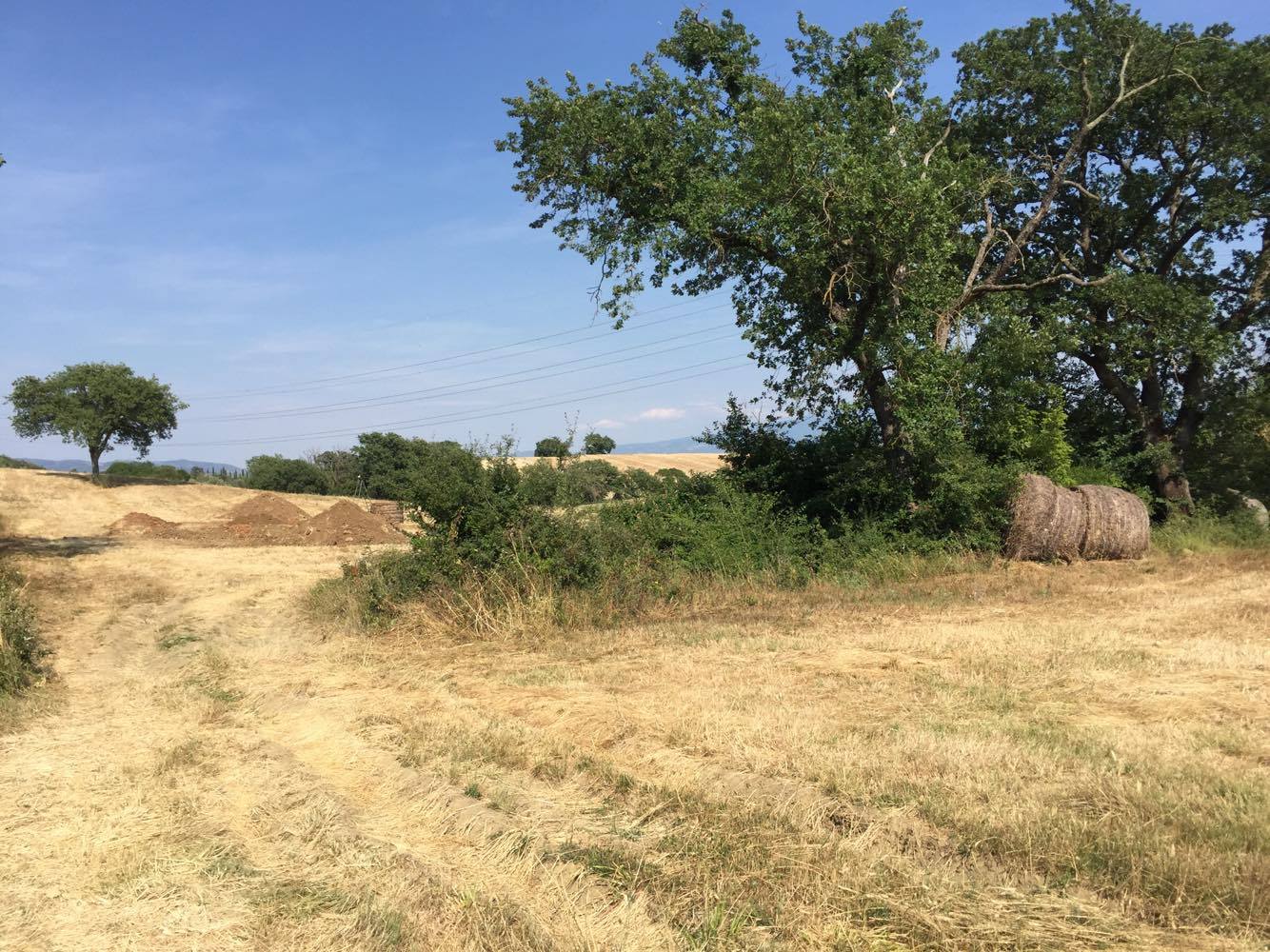
The project itself was tucked away in a stunning backdrop of rolling Tuscan hills. It contained remnants of a Republican Era vicus. It first appeared as a small slab of stone, no wider than my forearm. Our first few days were fruitless, barely finding anything. But, as we slowly removed the contexts, a thick wall, dividing several rooms, emerged. We then began finding pottery and iron nails, but most importantly coins. Coins, I learned, are immensely valuable for dating Roman sites. But perhaps my favorite find was a forge because it gave the site more life. I could really imagine people working over a fire and walking around a room, attending to their business.

What made the experience particularly special was our interaction with locals. We showed off our site to families, students from the area, and had dinner with people from the region. These interactions made the project more immersive and made me feel less like a tourist and more like a traveler. In addition, we did not remain tied down to a single location, but took gelato trips into the neighboring town, Paganico, visited other local sites, and attended an archeology exhibit in Florence. All of these excursions broke up our schedule so that our routine always felt fresh.

As for accommodation, Maura and I stayed in a slightly more modern villa, dating roughly to the 16th century. We shared an adorable flat, fully furnished with a kitchen and sitting room. Luca and his family opened their home to us and went above and beyond to see that we were comfortable, always checking in to see if we needed anything. Our food included plenty of carbs after a long day working and we were treated to homemade wine, cold cuts, and farm fresh eggs. Needless to say, our food was worthy of Italy’s reputation.

Archeology, like most things, is nothing like the movies. It is hard, hard work, physically and mentally. That being said, nothing compares to the satisfaction you feel, slowly, but surely, uncovering the past. I encourage anyone who is interested, regardless of what you may be formally studying, to give excavation a try.
Testimonial – Maura Timmons (Michigan State University)

            The Monteverdi archeology field school takes place just outside of Grosseto, Tuscany, Italy. During the duration of the field school, the archaeologists and the students will stay at a beautiful Italian villa, which dates to the 1400s. For the students, it was just Constance and I for the first year, we had our own flat to ourselves and we each had our own separate rooms, which is very rare for field schools. The flat also came with a full kitchen and living room with a TV, if we were inclined to watch a movie after getting done for the day. The villa also had a swimming pool for us to use occasionally to go cool off. Each of the meals, except for breakfast, were prepared for us by one of the cooks provided by the owners of the Monteverdi Villa. The first night we arrived we had a beautiful dinner prepared for us by the family of the estate. That dinner was almost in a barbeque like setting, and both Constance and I were introduced to the entire family and to the rest of the excavation team. The final dinner was a repeat of the first, except we went full ‘American’ barbeque with the meats. These two dinners, with everyone staying at Monteverdi in attendance, created a beautiful start and ending to an epic completion of the field season.

            The actual archaeology work was different than what I was used to previously. I have done some minor archaeology work in Montana, USA prior to working at Monteverdi. The main difference I found in this excavation was the hardened clay stratum, which required an abundance of pickaxe work. The site itself is located about ten-minutes from the villa in a field used for growing straw hay. In the afternoons, a wind normally picked up, which the team very much appreciated. Each new artifact or feature made the hard work worth it, overall, because another piece of the puzzle was given to connect the dots on what type of structure(s) we were uncovering. So far, the site has been dated to 2nd– 1st century B.C. Roman Republic based on the ceramics and coins found, and those dates may change as the future archaeologists start unearthing more of the puzzle.

            The smallness of the team this year gave us the opportunity to truly bond over the course of this excavation. Additionally, both Constance and I could get one- on- one with the professors and (attempt) to truly learn their methods for excavation. Overall, all the people I met and worked with on the field school were warmhearted, friendly, understanding, and most importantly, had a great sense of humor. Some advice for next year’s students, bring a good water bottle and plenty of sunscreen. Most of the time work will be done under direct sunlight, which requires proper clothes, sunscreen, and most importantly, staying hydrated. Another important item to bring would be leather gloves that have already been broken in prior to the excavation.

A big thank you!

So the first archaeological season at Podere Cannicci has finished. The experience has been unique and the archaeology at the site has shown all its potential. A quintessential late Etruscan to late Republican settlement, most likely destroyed by a fire during Sulla’s first Civil War. Evidence of a much later occupation between the late Antonine and the Severan period starts to appear, and we hope to better define the history of the settlement in the coming years.

However, today is the day of thanking a series of people who took part directly or indirectly in our adventure! Our very own students, Constance Champagne and Maura Timmons, whose efforts and passion faced the heat and sun of Tuscany and nonetheless they did a wonderful job! Paolo Giannuzzi Savelli and his son Iacopo gently supported the project and allowed us to start the excavations in their estate. Luca Giannuzzi Savelli, our project manager and site assistant, has encouraged the beginning of the project since 2015 and made us feel at home every single day. A special thank you also to all the staff of the Tenuta di Monteverdi (especially Filomena, Noemi, Tina and Cesare) for providing us with all the services and fantastic food every day! Edoardo, Luca and Valentina have been amazing with their expertise and patience: day by day they have uncovered the hidden story of the site, deciphering all the human activities at the site over time. Todd Fenton attended the first week at the excavations, providing good humor and serenity to the whole team. A special thank you to Andrea Marcocci who helped so much in setting up the project. He shared all his (large) knowledge of the territory and we are all looking forward to the publication of his book! Massimo Brando and Valentina Pica came to visit us and provided so many detailed information on the pottery assemblage that helped so much the final comprehension of the site! Fabiana Fabbri has also dedicated much of her time to visit the excavations and she enlightened us on the votive deposits that she has been studying over the last years.

The rendez-vous is set for next year! The Impero Project will continue the exploration of the territory of Paganico and we will keep you all posted on the results of the excavations! As always.. stay tuned!

Alessandro Sebastiani

P.S.: I already miss the mascotte of the excavation evenings, Candela!

IMG_9386
2017 Excavation Team


Journal of the Excavation (13.06.2017)

Today was the last day of excavations of the 2017 archaeological season at Podere Cannicci. We spent the day removing a new context (28) identified underneath context 25. Once again the deposit was rich in material culture, especially pottery. Although the context can be dated around the 2nd c. BC, a fragment of a possible Goudineau 41 vessel dated to the 2nd-3rd c. AD has been recovered. Moreover, a couple of fragments of Italian Sigillata have been rescued from the same context allowing to argue that a later occupation of the site can be detected somewhere else within the area. We thank our pottery specialist Massimo Brando and his expertise for this preliminary data and we hope to start the assessment of the assemblage as soon as possible.

Tomorrow we will finish the graphic documentation of the site while our students will continue to wash the outstanding quantity of pottery.

19125968_10155428000821974_1339589982_o

Journal of the Excavation (12.06.2017)

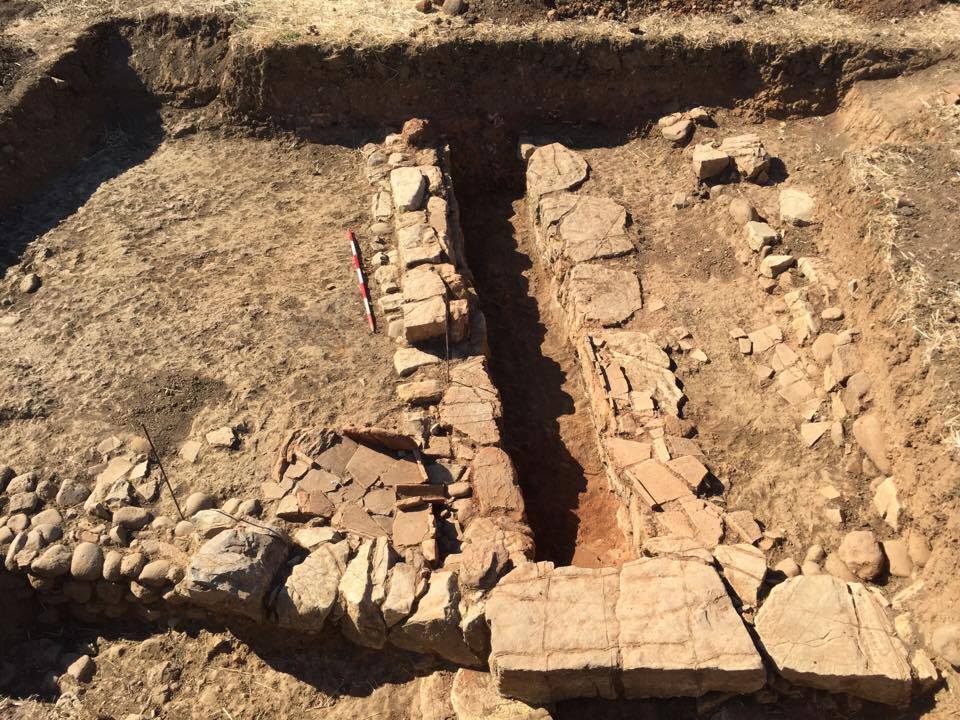
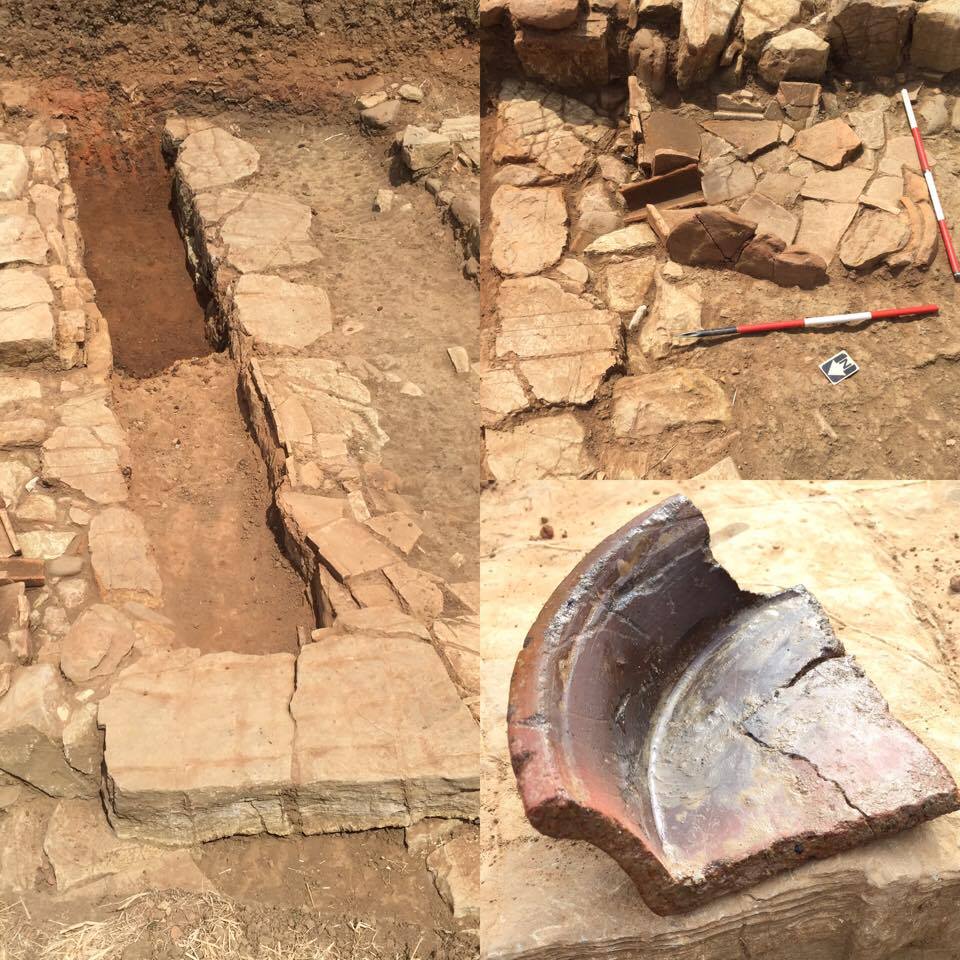
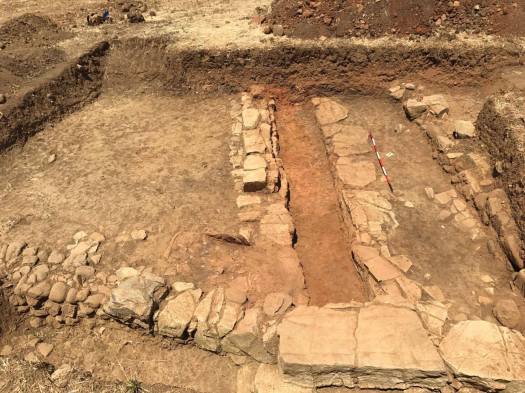
Today we spent the day completing the removal of context 25 within the large drain between the two parts of the complex. Below context 25, a silty/sandy deposit has been uncovered but not yet fully exposed. We also spent part of the morning documenting the forge/kiln discovered on Saturday. In the afternoon we started again to excavate in the NE corner of the excavation trench where traces of a possible kiln/structure have been uncovered last week.

At lunch time Dr Fabiana Fabbri has come to visit us and she will be staying with us until tomorrow; in the last years, she has been in charge of the publication of the votive offerings found during the 1989-1990 excavations at Podere Cannicci (see bibliography tab) and we hope to start a fruitful collaboration with her.

19113436_10155424359216974_1967357818_n

Journal of the Excavation (10.06.2017)

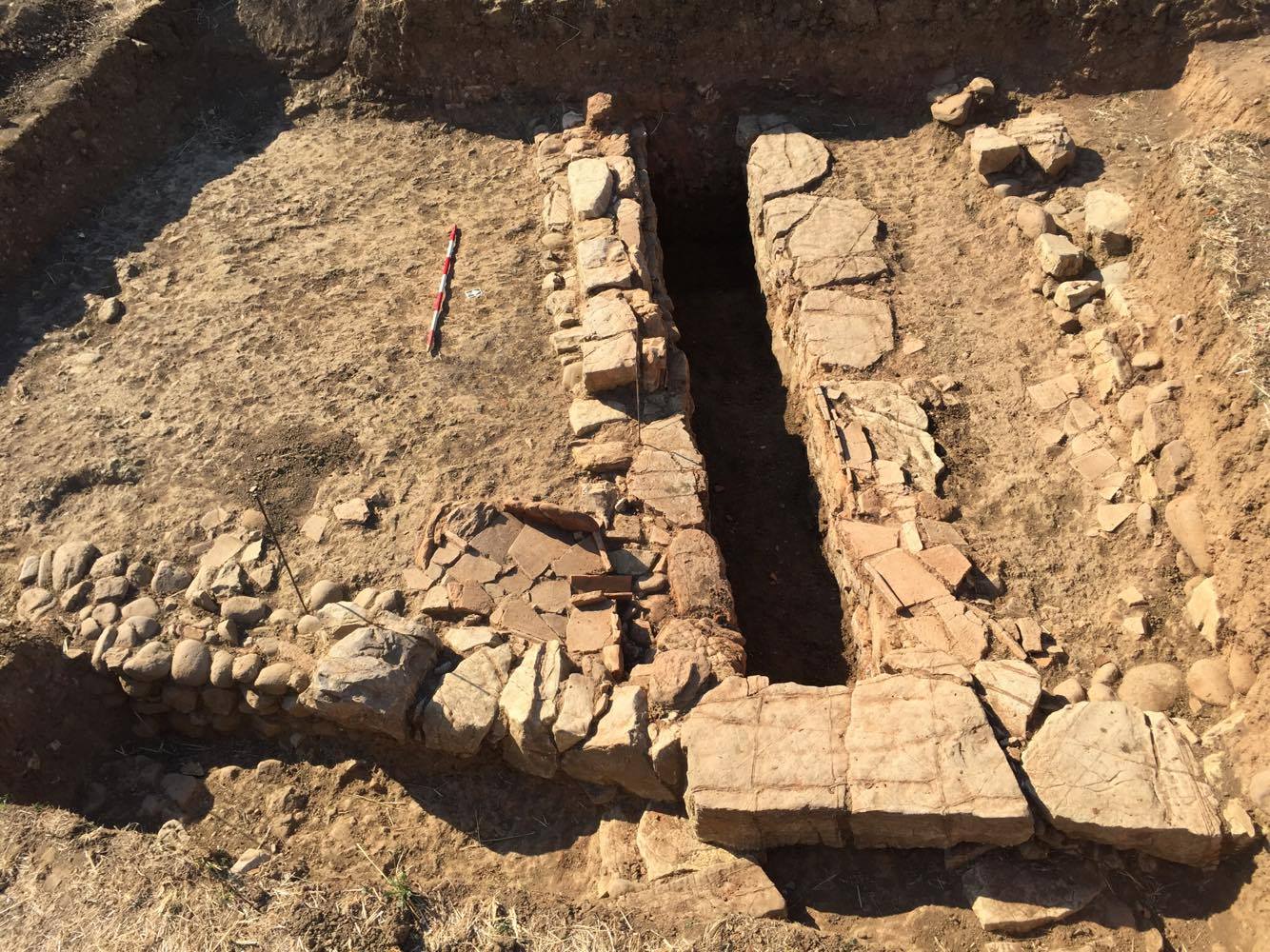
This morning we started to remove context 25 from the ditched area between the two rooms of the complex under investigation. This context is a deposit of burnt clay and wooden elements (mainly beams) that abuts both walls 15 and 22. In the southern part of the excavation area, close to wall 7, we exposed the remains of the forge of the metal workshop, which was also used as an oven/cooking surface as well witnessed by a series of cooking wares found during its excavation.

19075215_10155415711826974_1391615272_n

Journal of the Excavation (09.06.2017)

Today we continued to remove context 23, a red deposit between walls 15 and 22 in the northern part of the trench. Apparently the context fills a possible large drain continuing beyond wall 6 towards the exterior. Tomorrow we will check this hypothesis.

In the afternoon we are off to Florence for the opening of the exhibit “The Wells of Wonders” at the Archaeological Museum where we will meet the Florida State University team of the excavations at Cetamura in Chianti (Siena – Italy).19073020_10155411789966974_348399387_o

Journal of the Excavation (08.06.2017)

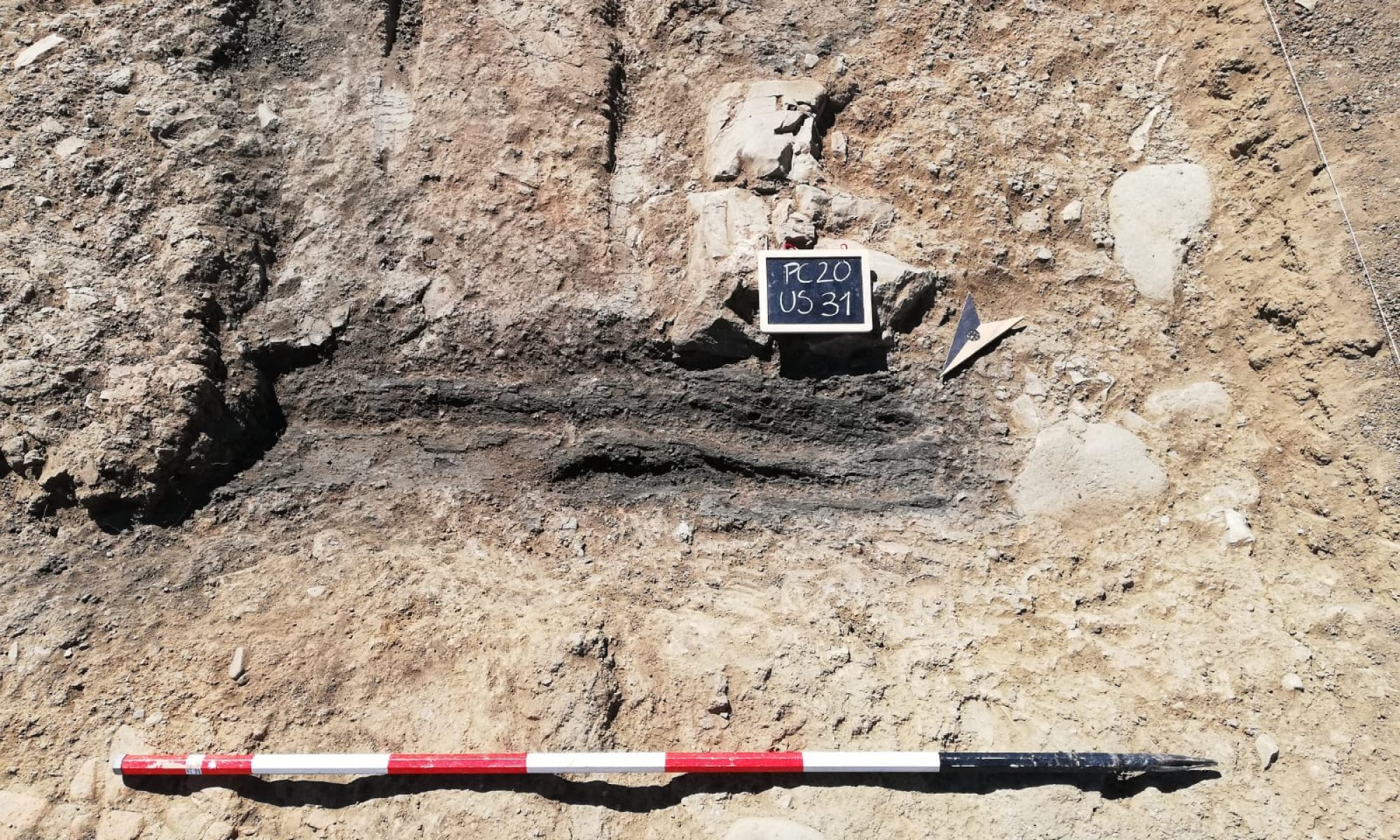
Today we finished to remove context 20 in Room I and then we moved back to Room II where we removed first context 21 and then, partially, context 23. Context 21 was a deposit of black soil, mainly clayish, with large inclusions of charcoal and lumps of burnt materials. Underneath it, a possible earth-beaten floor has appeared together with the remains of a small kiln/furnace area. In order to proceed stratigraphically, we then started to remove context 23, a deposit of burnt clay and collapsed roof tiles and raw clay tiles between walls 15 and 21.

19046622_10155408852356974_530572970_n