Podere Cannicci – Day 10 (June 7, 2022)

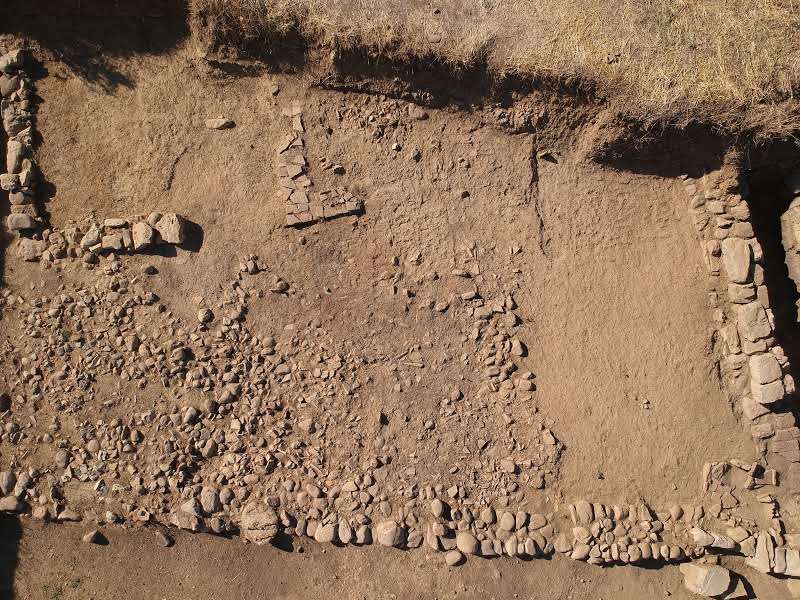
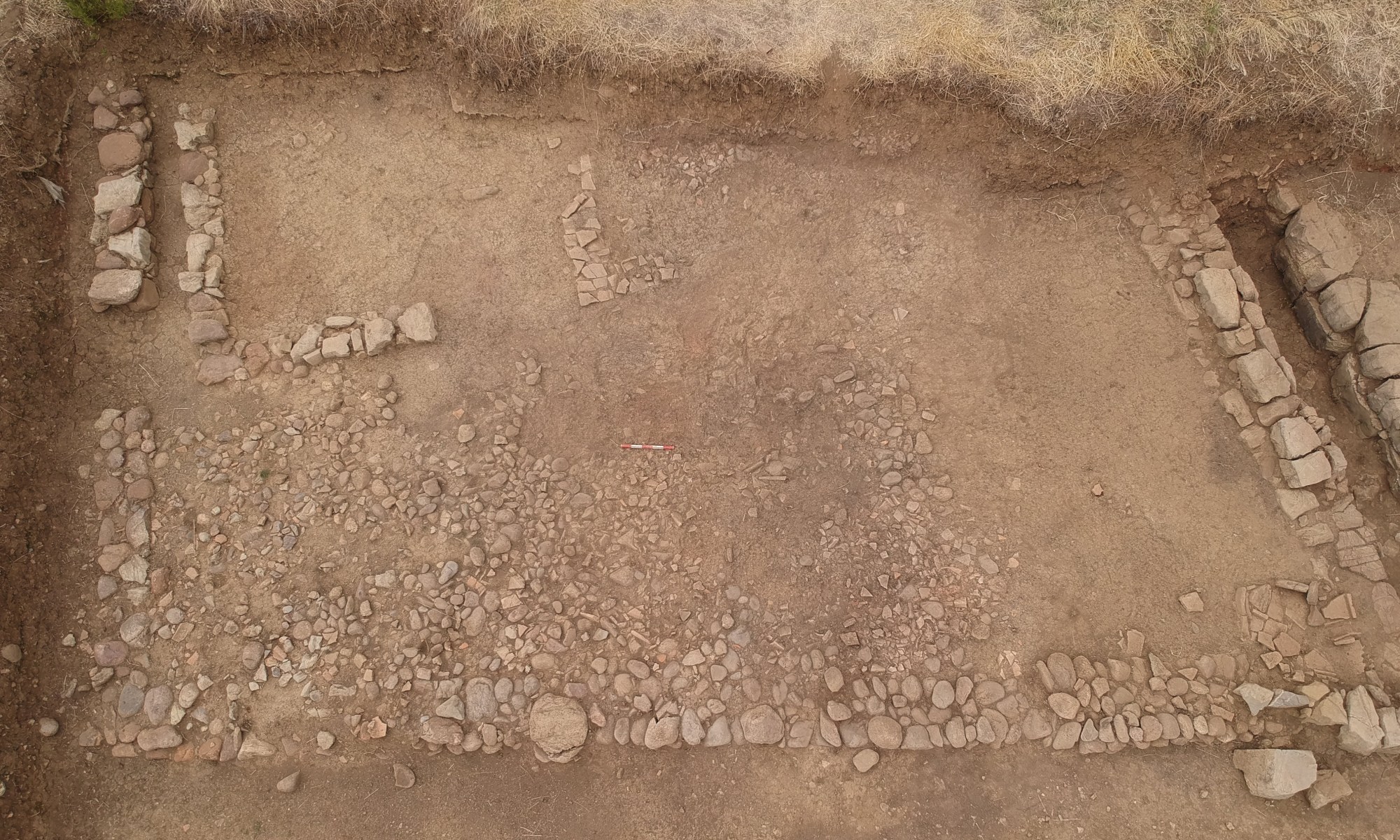
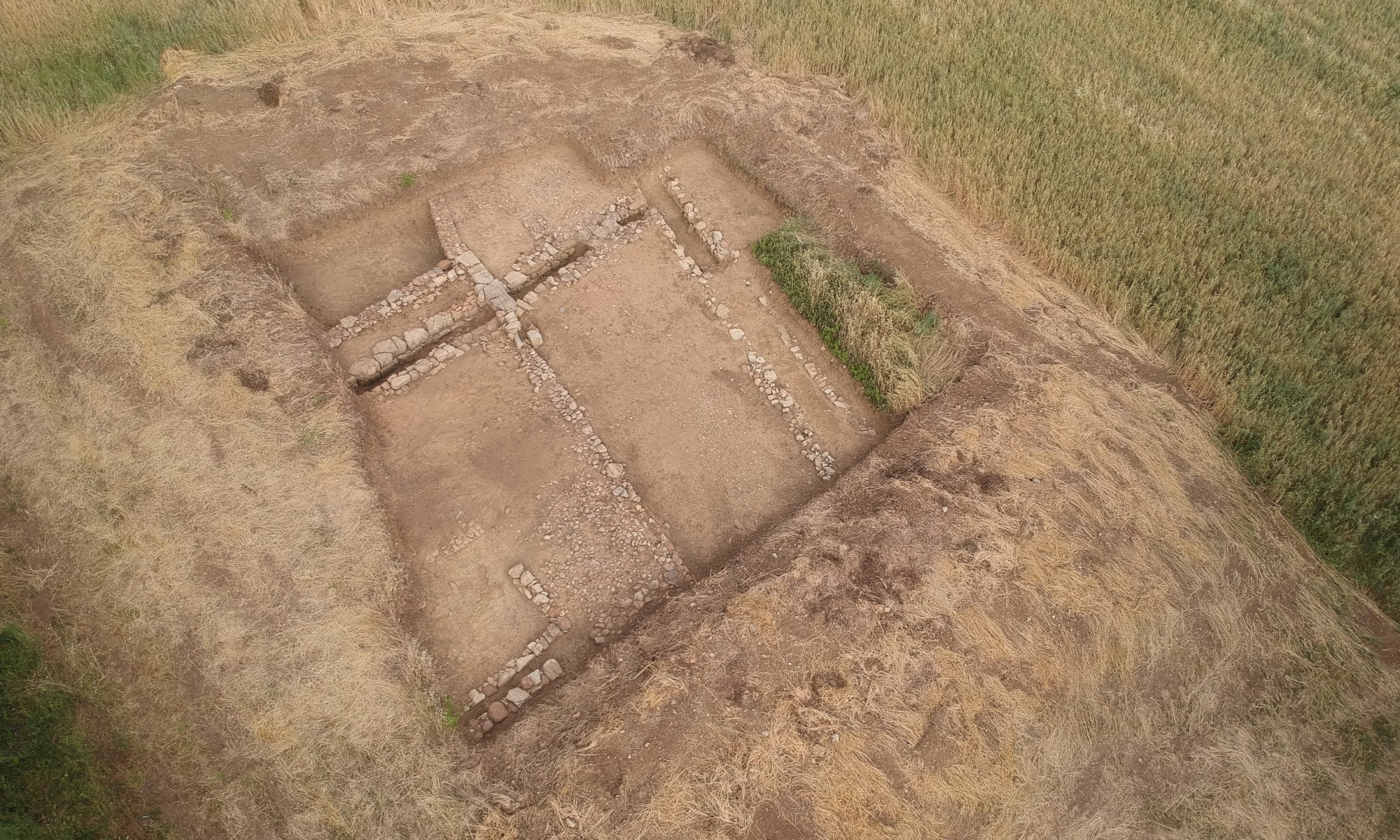
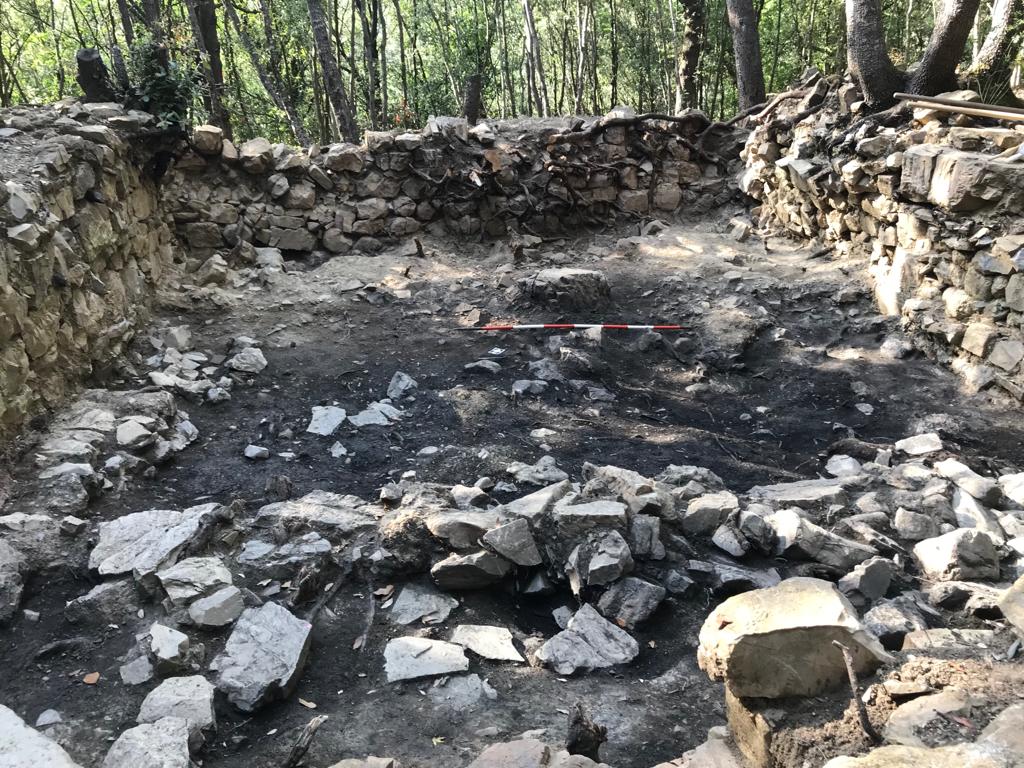
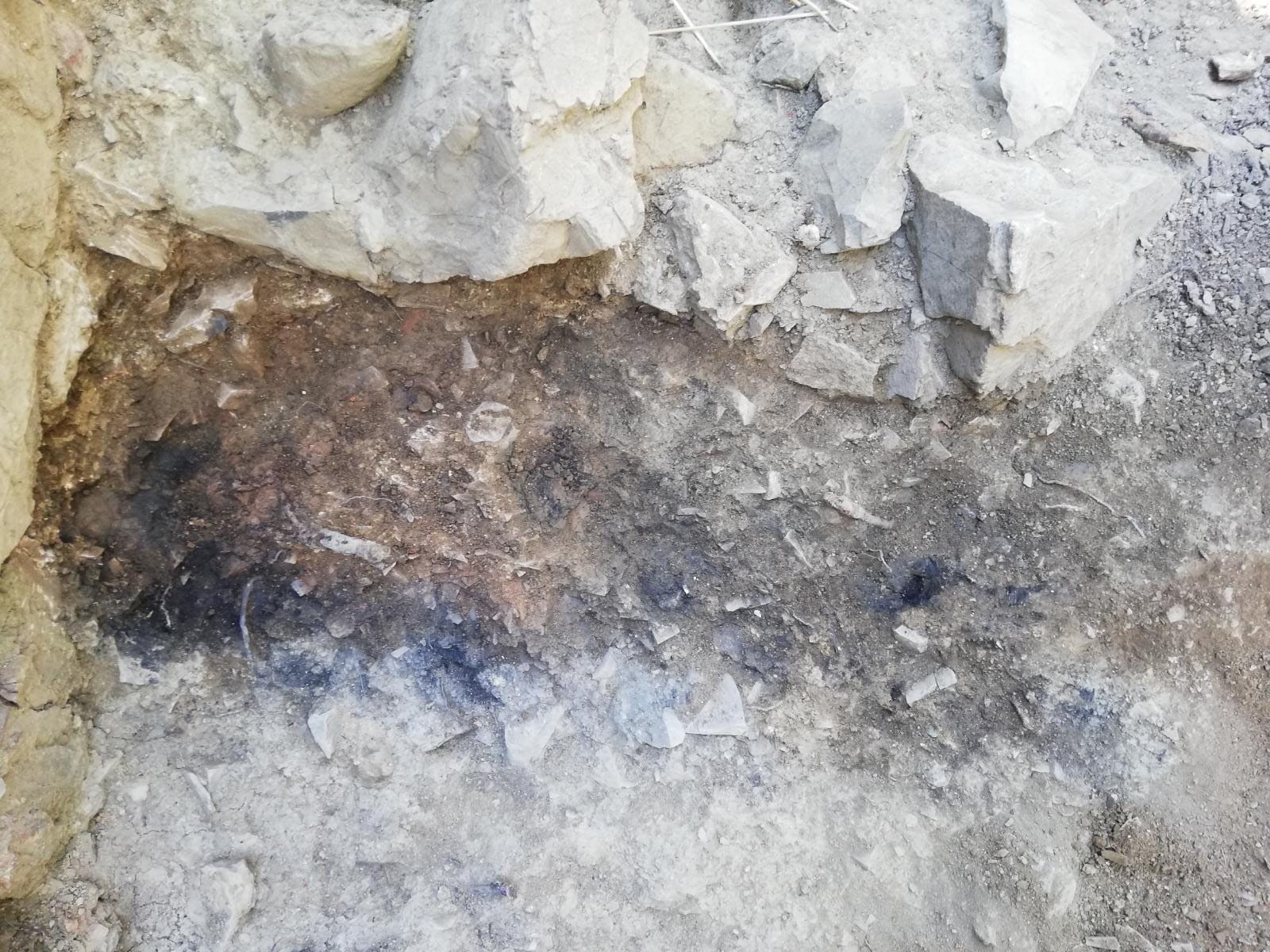
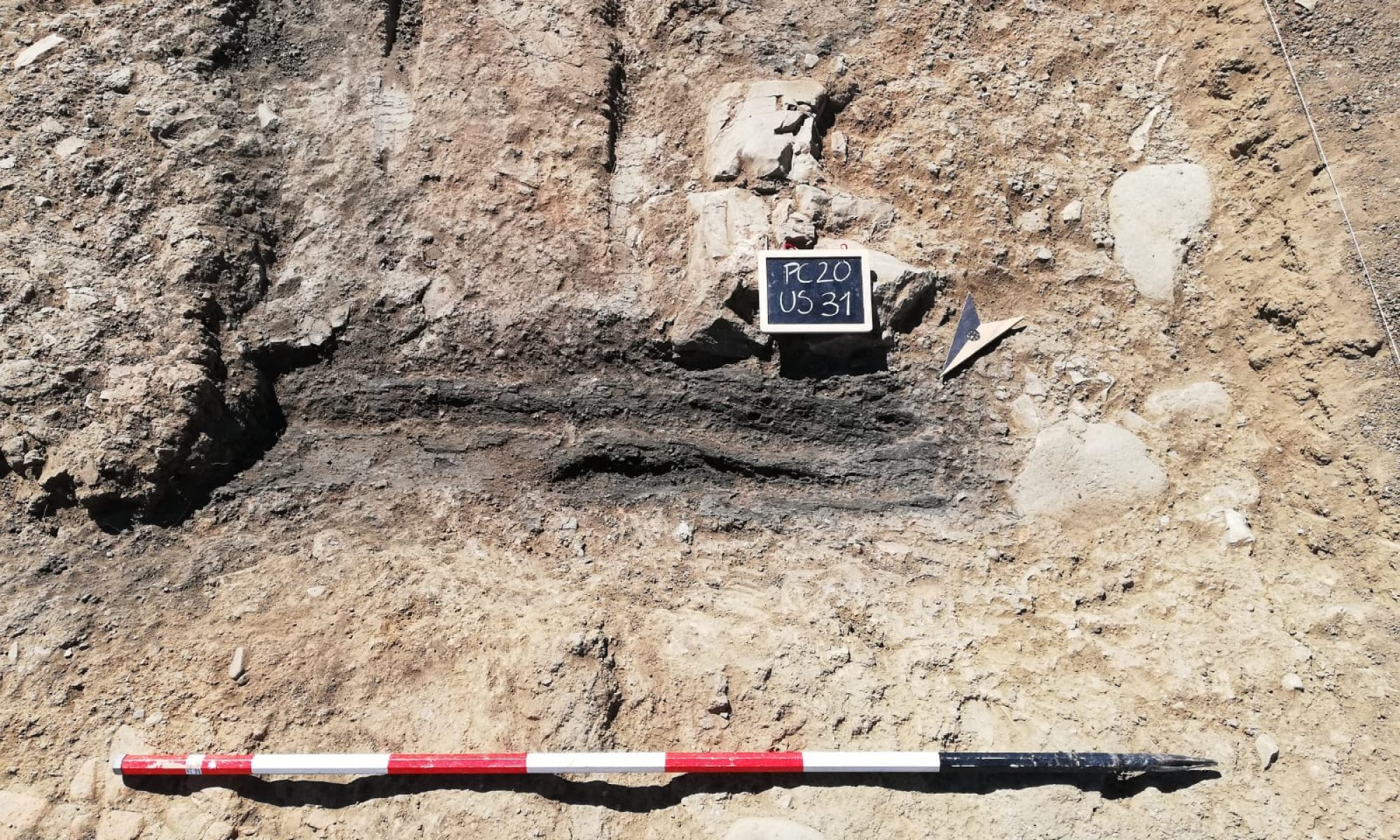
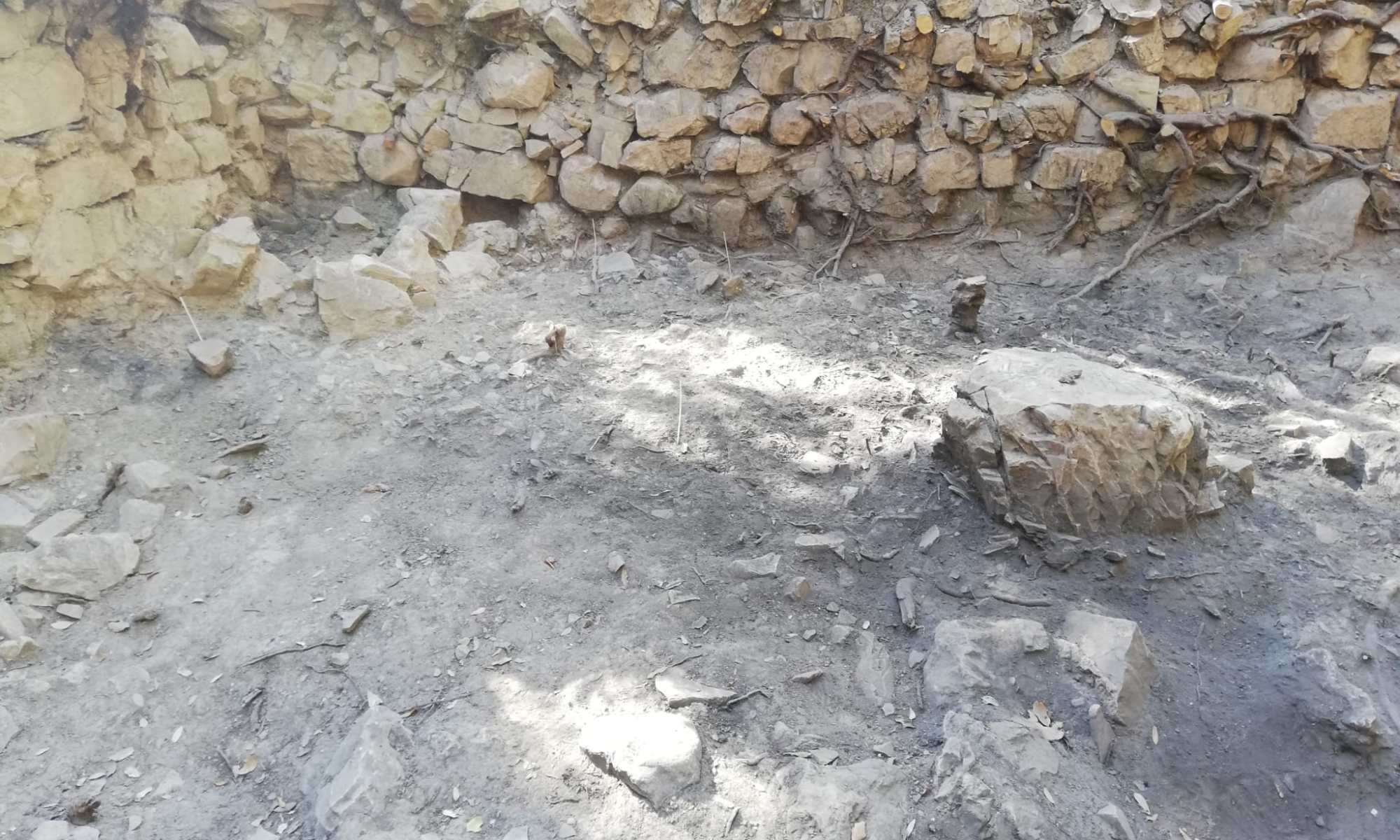
Area 1 hosted a large array of finds, from animal bones to slag to ceramics. The day began with the removal of Context 80, which was hypothesized to be a post-hole but, due to containing discharge from a ceramic kiln within the fill, is now believed to be a general waste area instead. Following the removal of Context 80, the removal of Contexts 70, 75 and 77 all took place under the potential hypothesis that they may be representative of a single large raw floor. The removal of the contexts saw additional, larger finds consisting of larger ceramic vessels. The removal of Context 75 was suspected to hold a continuation of Context 60; instead, what was demonstrated was that Context 75 continued deeper and represents a well-packed raw floor, which will need further excavations.

Tomorrow holds much more in store as we continue to remove Context 75 and, soon, the ceramic and stone materials that comprise Context 60, including some exciting elements such as amphora and black-gloss ceramic wares.
Castellaraccio di Monteverdi – Day 10 (June 7, 2022)

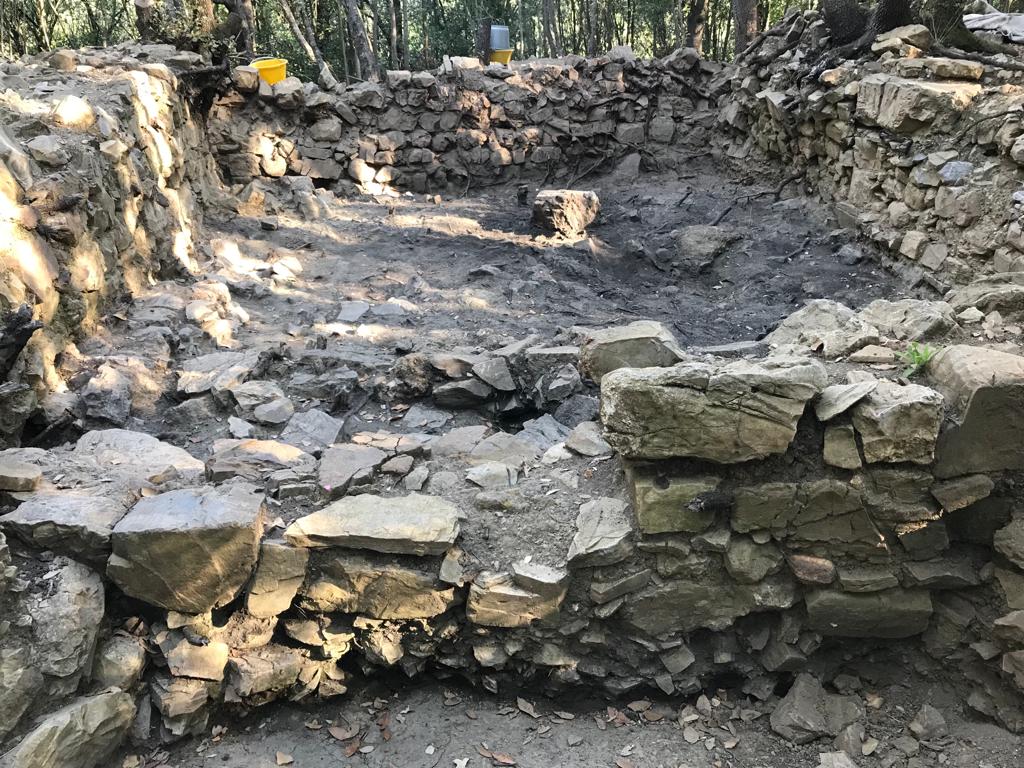
New day at the castle. Today we documented with the total station all the new layers exposed in the northern side of the area. Michelle reviewed the stratigraphy with the rest of team and we did a photogrammetry of the area. After this, we started to excavate the dark context 55. This level is also rich in burnt seeds so we had to take samples and sieve the soil. We are now entering in an older phase of occupation of the castle and context 55 represents the final occupation of this previous period.

Ryan has almost completed the excavation of the topsoil, fully exposing what looks like the corner of a wall, most likely belonging also to an older phase of the castle. Outside this structure, on the east, a group of collapsed bricks, a rare construction material, so far, at the castle.

Castellaraccio di Monteverdi – Day 9 (June 6, 2022)

Today, in the extension of Area 3000, Ryan exposed a new collapse in the easternmost part of the trench. At the same time, he was able to identify the corner of the east-west wall which is delimiting the southern edge of the area.

In Area 2000 the rest of the team almost completed the removal of context 37, exposing the continuation of the black, organic context 55 and a series of new layers that will need identification. The team also found two interesting finds: the rim and handle of a Pisan amphora dating to the 13th century, and an iron arrowhead in the interface, recovered between 37 and 55, possibly of a similar chronology.

Podere Cannicci – Day 9 (June 6, 2022)

Today, the students of Podere Cannicci split into two groups, both setting to work on understanding and removing Contexts 75 and 77, the raw floors that were discovered last week.

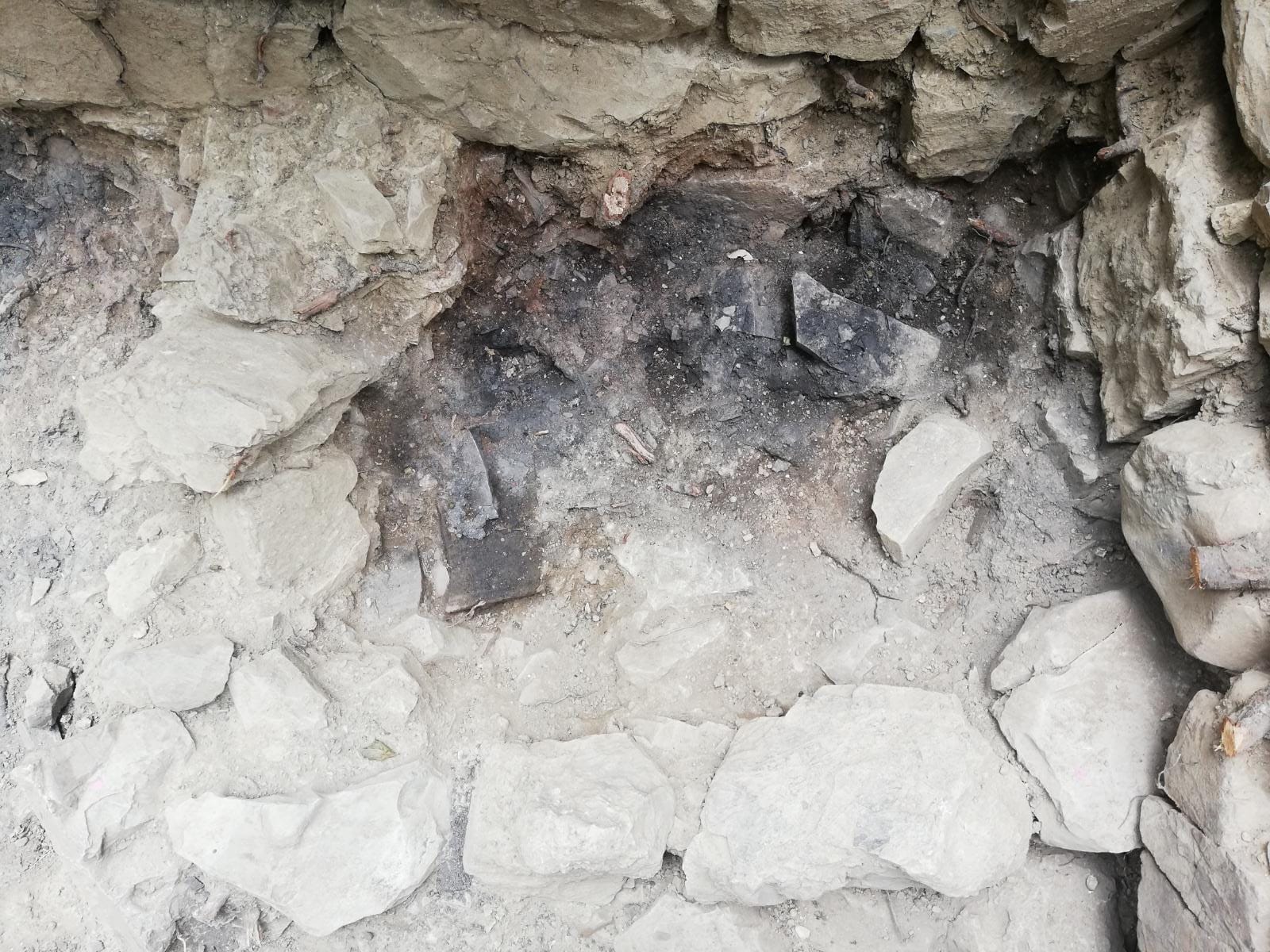
During the removal of Context 75, the students discovered a grey circle defined by ash and charcoal, perhaps a posthole, just to the east of the corner formed by the tile walls 68 and 76. This feature has been documented and will be excavated tomorrow morning, at which time we will understand better its function and relation to the carbonized beam, Context 74.

The second group began to remove Context 77; this floor, however, proved thicker than expected and will be uncovered in the coming days. Simultaneously, one student, Callie, investigated a patch of charcoal, Context 78, that had been identified at the end of last week. In fully removing the charcoal, Callie’s labor revealed that 78 was indeed the fill of a cut, now labelled Context 79, and was embedded within Context 77’s compact clay. The fill contained substantial amounts of slag as well as some ceramics. Although this feature may have been related to the activities of the furnace located directly to the east, the depth of the cut has led the team to diverse hypotheses of its purpose; we hope to better understand the feature by the end of Context 77’s removal.

Partway into our efforts, the Cannicci team was also visited by two external archaeologists staying nearby, who helped us to begin to remove the final raw floor, Context 70, and to reveal the expanding reddish-brown soil beneath. This effort will likewise be completed in the coming days.

All three lines of investigation have promised to uncover another phase of life in Area 1. Indeed, the zone has proven to be richer than previously believed, and we are hopeful that, by the end of the season, we will better understand the activities and experiences of those who once labored in the valley.

Castellaraccio di Monteverdi – Day 8 (June 3, 2022)

The last day of the week saw the documentation of the layer 37. Using the perfect morning light, we did a full photogrammetry of the area. This layer was recognized over the past few years as the last floor of the room before its abandonment and restituted a great amount of depurated and semi-depurated pottery, iron nails and some glass. We also uncovered a beautiful fireplace in the north-western corner of the site. We then started excavating it to reach the previous phase of occupation of the castle, which we uncovered last year in the rest of the room. Ryan is continuing his work in the new test pit in area 3000, while Adi and Mahlet helped us cleaning Area 1000.

Podere Cannicci – Day 8 (June 3, 2022)

The students at Cannicci have showed incredible growth over the past two weeks, displaying independence and aptitude in both documentation and the use of various tools. Today, the team at Area 1 finished defining the edges of the trench and documenting Contexts 70 and 75, both representing probable raw floors defined by a hard-packed, yellow clay. After fully understanding the relationship between Context 75 and the mixed stone and tile contexts that bordered it, 60 and 73, which we now know to be an earlier action than the floor, we began to remove Context 75’s soil. The team plans to finish this task on Monday, after which we will be able to understand whether the stones represent a contiguous feature. The past few weeks have proven that our interpretations are always changing and that there is always something to discover!

Podere Cannicci – Day 7 (June 2, 2022)

A new day started with the removal of what remained of context 39 and the cleaning of some parts of layers which were still unclear. It was very important to all the team to expose all the layers very clearly before starting with recording and describing all of them.
Everybody had a briefing in order to define the stratigraphical situation inside the excavation area. It is important to have a share of thoughts in order to clearly understand the situation and then act as one. The team managed to locate and record 5 new layers, one of which was the rest of the beam (context 74).
They then proceeded with the documentation and started digging again starting from the top and most recent layer. The beam has been removed. In the meantime a part of the team helped with the cleaning of the northern limitation of the excavation. This allowed to expose other parts of context 73, an undressing layer of deposit of stones, bricks and pottery which seems part of a collapse of which only the edges are visible.
The cleaning also exposed layers identified as parts of ancient floors. We are allegedly walking on roman floors. Thanks to the teamwork everyone knows the process behind the decision of removing a layer deforme the other. Tomorrow we will be removing the next layer on top. A new phase of the building at Cannicci is emerging.

Castellaraccio di Monteverdi – Day 7 (June 2, 2022)

New day at the castle. Today, we borrowed Cleo to the anthropological team and gained Claire. After a quick introduction to the castle and stratigraphy we started to remove the last bits of the yellowish context 33 in the northern corner of the room. We found the traces of a fireplace in the north-western corner of the room. At the end of the day we almost fully removed 33 exposing context 37, the last floor before the room was abandoned. We recorded the plan of the layer and prepared for photogrammetry. Ryan continued its extension of Area 3000 exposing the continuation of the southern wall.

Castellaraccio di Monteverdi – Day 6 (June 1, 2022)

Today, the small Castellaraccio team split in two. After a quick visit from Edoardo and Federico to fix our GPS points for the total station, Ryan started his own area, extending the excavation of Area 3000 to the east, to understand the stratigraphic connections on that side. Alessandro and Benedetta instead recorded the yellowish layer in the northern part of Area 2000 using the total station, and started to remove it with pickaxe and trowel. This exposed the remains of layer 37, representing the room’s last occupation phase. Interestingly, the north-western corner of the room revealed a potentially interesting layer. Last year, we noticed a concentration of charcoal in this area, which we preliminary interpreted as a burned beam. However, the extension of the excavation is revealing an extended area with reddish ground and stones, indicating the presence of fire, in association with more charcoal samples. This can imply the presence of a hearth or a kiln but only further work will eventually confirm this hypothesis.

Podere Cannicci – Day 6 (June 1, 2022)

The team started the day after a brief visit to the Monteverdi bridge on the Ombrone river. During the visit, they have been told about the importance of routes and paths to understand ancient landscapes.
We then moved back into Cannicci to continue the digging of Context 39 – a compact layer of burnt materials marking the collapse of the structure.
The students joined Michael and Betsy in removing the layer gradually and learn the proper use of the tools needed for the work. In the meanwhile, Federico scrupulously checked the forms to take accurate records of the ongoing work.
The team successfully located a dark charcoal print visible on the interface between context 39 and a new context, in the proximity of the northern limitation of the excavation area. The shape of the charcoal print and the coherence of it has let the team identify it as the burnt remains of a beam. The beam probably fell from the roof during the fire that destroyed the structures and became trapped in to the collapse.
Everybody has got very excited and inspired by their discovery. The students tested themselves and proved to be able to put the stratigraphy teachings they had into practice. This has made them more confident in they capabilities and also made Betsy and Michael very proud of them.